
13 Nov NFPA 1970: What does it mean for the industry?
Firefighter protection standards have made significant advancements with the recent implementation of the NFPA 1970:2025 standard.
This new regulation merges multiple earlier standards into a single comprehensive benchmark and, for the first time, mandates the use of particulate barrier hoods for structural firefighting.
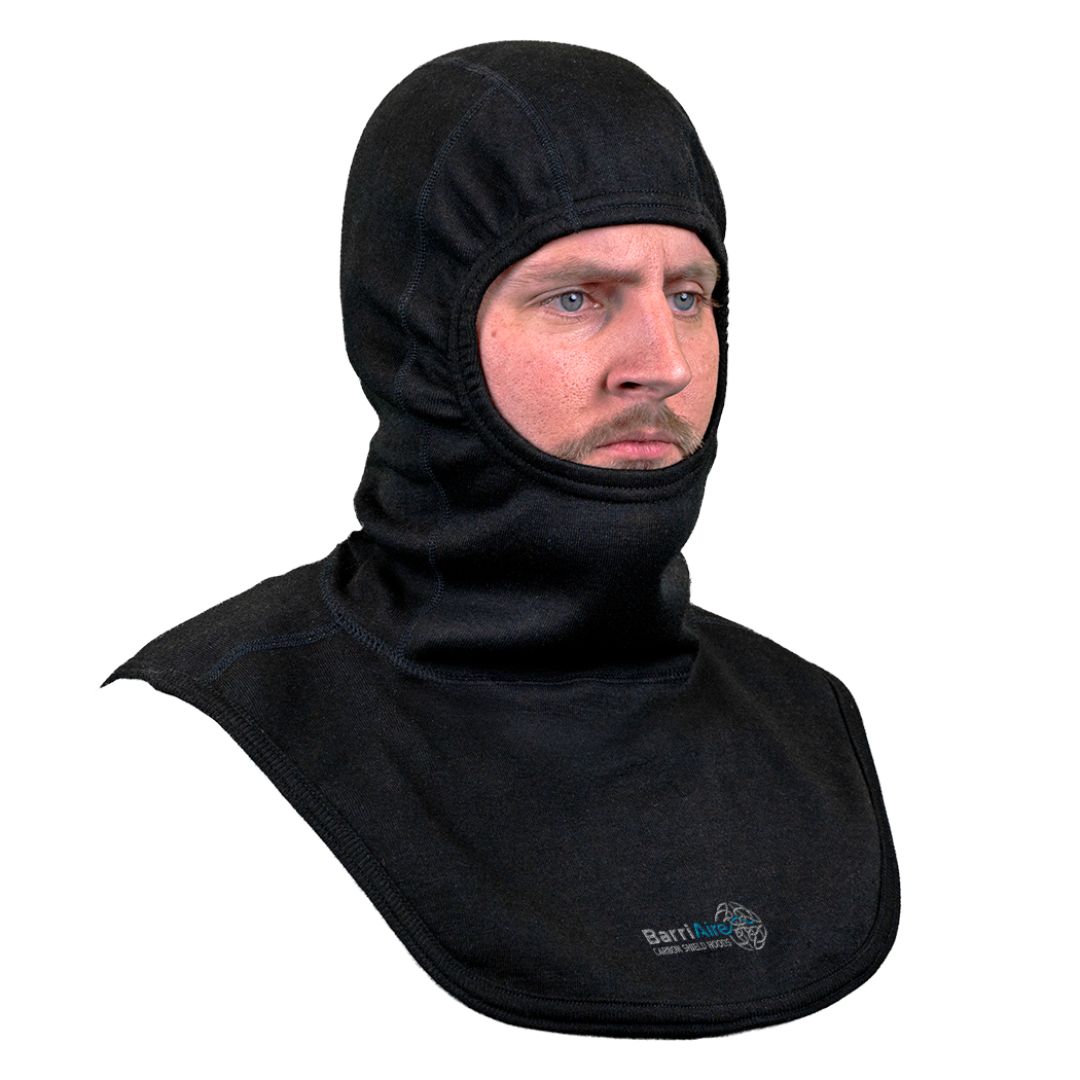
In response to this important development, PGI Safety Gear has introduced its BarriAire Carbon Shield™ Elite Pro and Elite Pro Short hoods, both UL Certified to meet the new requirements.
Under the previous NFPA 1971:2018 standard, the use of particulate-blocking hoods was optional, allowing departments to choose between standard knit hoods or hoods with a protective barrier.
The 2025 update streamlines NFPA 1971, 1975, 1981, and 1982 into a unified standard that covers structural and proximity firefighting gear, SCBA, PASS devices, and work apparel.
This new regulation mandates the inclusion of particulate-blocking hoods to protect firefighters from carcinogens and toxic contaminants for the first time.
While traditional knit hoods may still be permitted for proximity firefighting or temporarily under older certification, all new structural firefighting gear must now incorporate certified particulate protection.
This change reflects a growing global commitment to enhancing the safety of firefighters against long-term occupational health risks.
PGI’s BarriAire Carbon Shield™ Elite Pro and Elite Pro Short hoods, Majestic Fire Apparel PAC and MM series hoods, are also aligned with the NFPA 1971-2018, before it transitions to 1970.
Offering an impressive 99.9 per cent particulate efficiency, PGI’s hoods are constructed from the most flame-resistant fibres available and are free from intentionally added PFAS.
This combination ensures a performance level, breathability, and health safety that is rarely found in firefighting personal protective equipment (PPE).
Designed for extended wear, these hoods provide advanced protection against heat, carcinogens, and toxic particulates while remaining softer and more breathable.
The introduction of the NFPA 1970 standard comes at a crucial time for Africa, where modernising civil defence is a national priority.
There is a noticeable increase in the adoption of NFPA-certified firefighting gear across the region, including particulate-blocking hoods and turnout gear, in response to both international best practices and national safety regulations.
The emphasis on particulate protection in the new standard aligns closely with initiatives by civil defence authorities to minimise exposure to cancer-causing contaminants that are linked to occupational illnesses in firefighters worldwide.
Experts highlight that NFPA 1970 unifies and strengthens previously fragmented standards, establishing a clear and measurable benchmark for safety performance.
As departments across the region transition to upgraded PPE, the adoption of certified particulate hoods like the BarriAire Carbon Shield™ is anticipated to become standard practice.
The shift to mandatory particulate barrier hoods represents more than just a regulatory update; it signifies a crucial step forward in safeguarding firefighter health for the future.
By blocking up to 99.9 per cent of airborne particulates, hoods like the BarriAire Carbon Shield™ Elite Pro significantly reduce exposure to harmful toxins and soot that can penetrate conventional knit fabrics.
Sorry, the comment form is closed at this time.